[
]
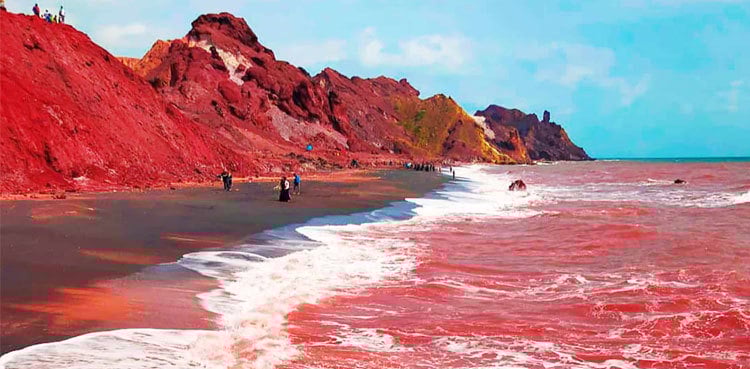
HORMUZ: Iran’s Hormuz Island in the Persian Gulf was transformed into a striking shade of red after heavy rainfall washed iron-oxide soil into the sea, creating fascinating scenes along the shoreline.
Videos and images shared on social media show rainwater carrying mineral-rich sediment from the island’s slopes into the surrounding waters, colouring both the sea and sandy beaches a vivid crimson. The phenomenon was most visible along the island’s famed Red Beach.
Hormuz Island, located in the Strait of Hormuz, is renowned for its naturally red soil, known locally as golak. Rich in iron oxide and other minerals, the soil gives the island its distinctive colour.
When intense rain falls, torrents of this red sediment flow from the cliffs into the ocean, producing the dramatic colour change.
Some observers refer to the phenomenon as “blood rain”.
Often called the “Rainbow Island” for its multi-hued terrain, Hormuz features landscapes in shades of red, yellow, orange and ochre formed through complex geological processes over thousands of years.
The rainfall-induced transformation has become a celebrated natural event, drawing tourists and photographers eager to capture the island’s vivid and otherworldly scenery.
[
]
About the Author